Many people feel pulled toward healing but aren't sure where to begin. If you've recently been searching for something like a sound healing meditation class in NJ, you're not alone. That quiet curiosity often surfaces when we're looking for more calm, more meaning, or a different way to care for ourselves and others.
Summer in New Jersey can offer just the right pause to explore something new. With more daylight, adjusted work schedules, and a natural shift in pace, it's easier to carve out time for learning without feeling rushed. If you've been thinking about the idea of becoming a sound healer but didn't know how to start, this can be a good place to begin. We'll walk through the basics, what to expect as a beginner, and why this path means more than just picking up a new skill.
What Is Sound Healing and Why It Matters
Sound healing is rooted in the simple idea that sound can help the body relax. It's not about music performance or entertainment. It's about using instruments like Himalayan singing bowls, chimes, or gongs to help the body and mind settle into a slower, more restful state.
When most of us think about stress, we picture a busy schedule or heavy emotions. What's easy to overlook is how sound can shift all of that, gently and without pressure. People are often drawn to sound healing because:
- They want to release stress and tension without talk therapy
- They're looking for more balance across their work, emotions, and physical body
- They feel better in quiet spaces and want to share that experience with others
When listening to these healing instruments in a calm setting, many notice changes in their breathing, thoughts, or body temperature. These shifts aren't forced. They simply happen as the brain slows down and stops trying to stay alert.
That connection between vibration and rest creates space for the body to release whatever it's been holding tightly, which is why sound healing can feel more like a reset than a technique.
Signs That You're Ready to Start Learning
Most people don't just wake up and decide they want to be a sound healer. It usually starts with something smaller, an interest in meditation, a love for calming music, or needing something new after burnout.
If you've been feeling emotionally heavy, or you're looking for more meaningful work, that could be your inner signal. Many of the people who feel called to sound healing have a few things in common:
- They've always been sensitive to sound, noise levels, or energy around them
- They want to do work that supports others in a calm and grounded way
- They don't feel at ease in loud or high-pressure spaces
There's a common belief that you need to have a musical background or some kind of degree to begin. That's not true. You don't need to sing, play an instrument, or teach a class right away. The first step is just being interested. From there, it's about showing up, listening closely, and building your own practice over time.
What a Beginner Experience Might Look Like
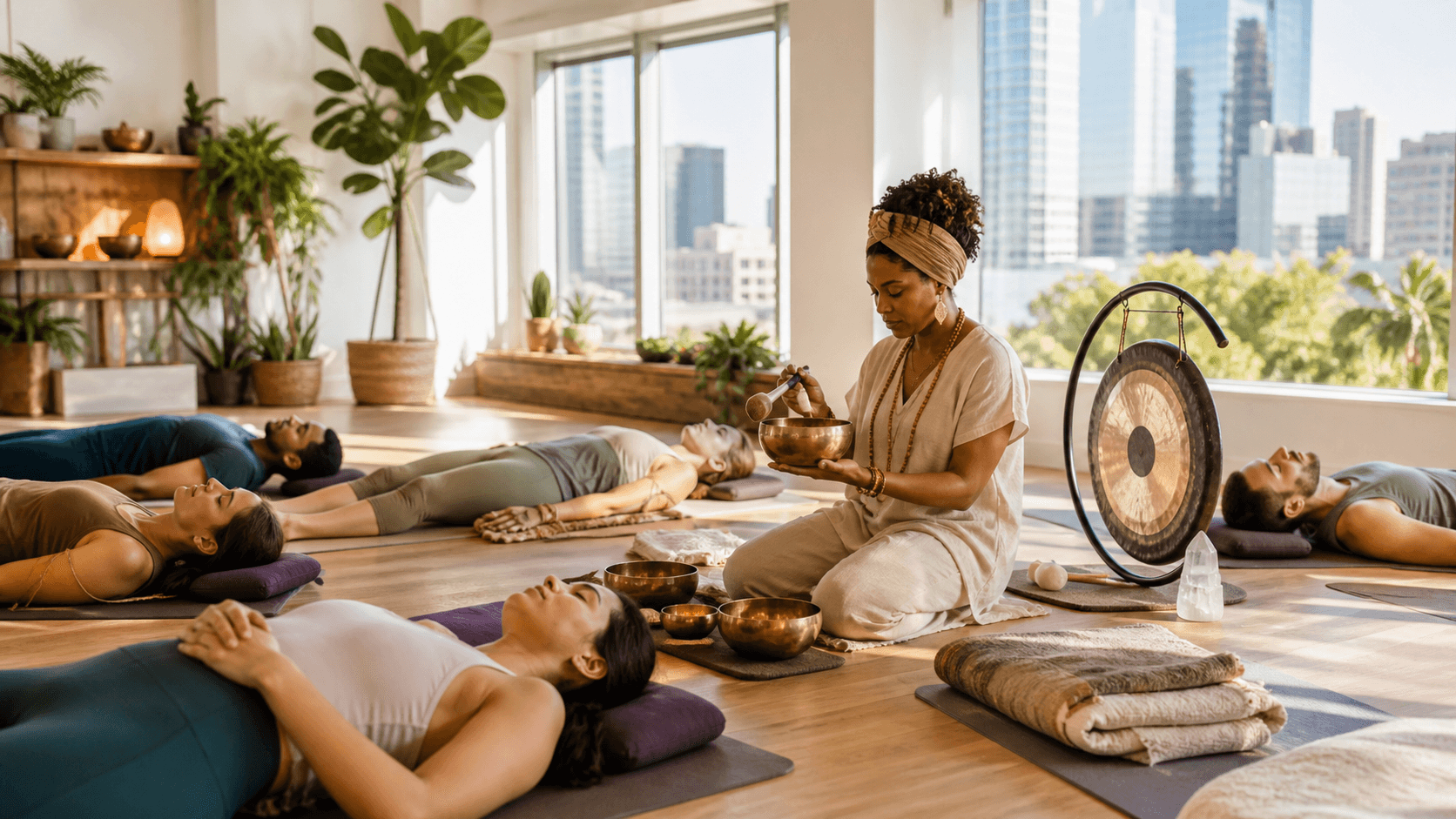
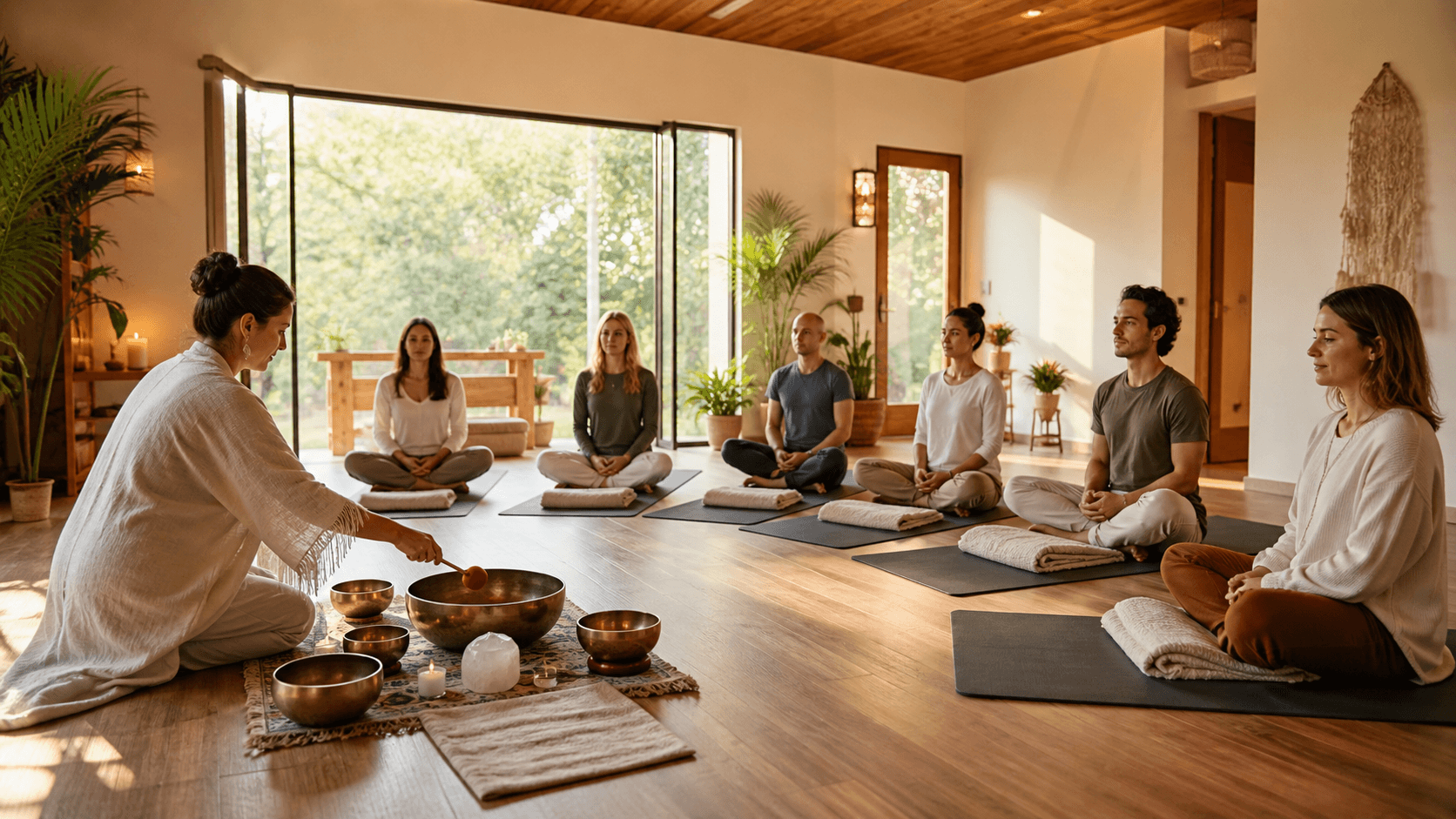
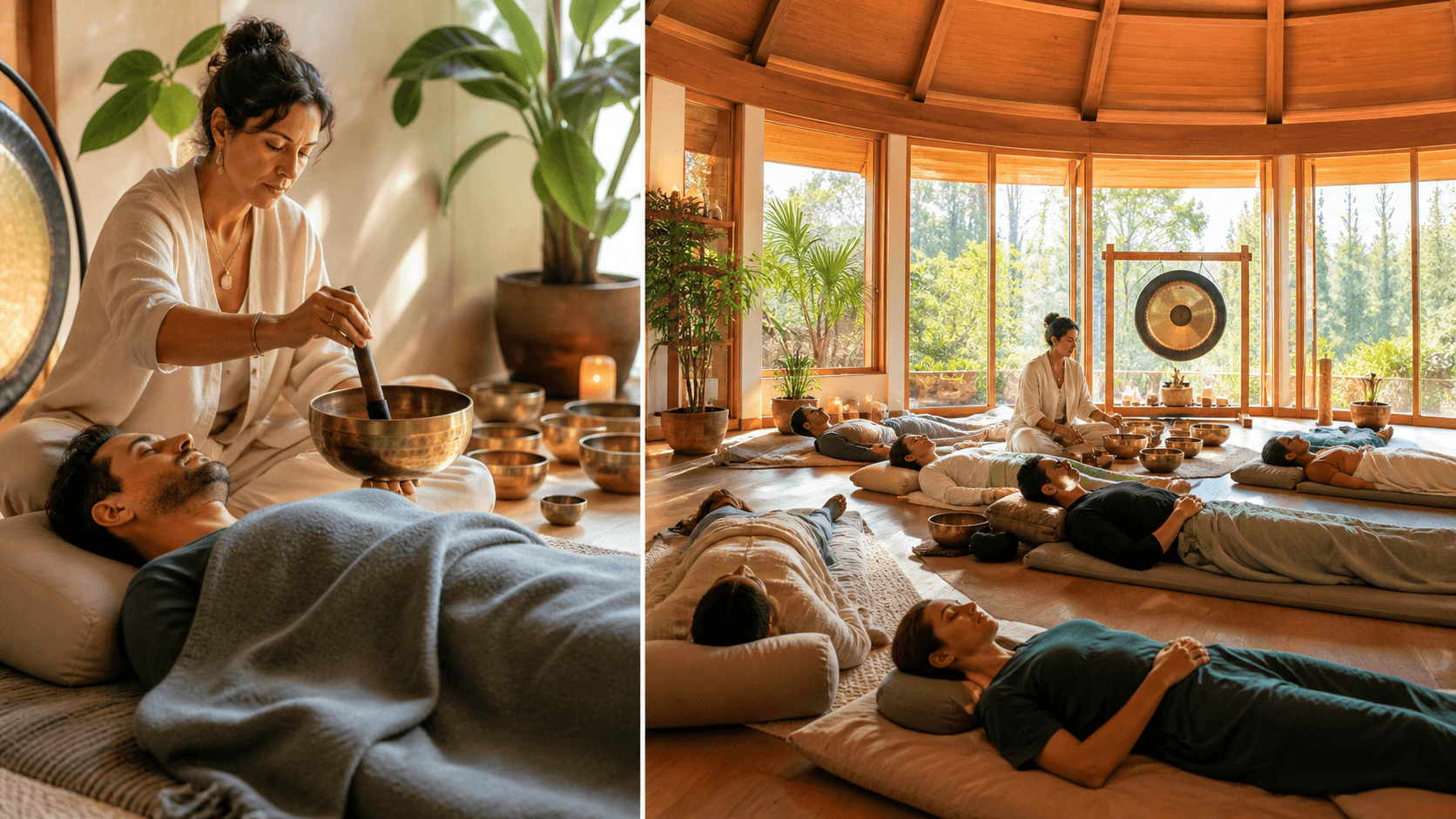
Trying something for the first time can be intimidating. But a sound healing meditation class in NJ usually feels peaceful and low-pressure. You don't have to talk, perform, or even know what you're doing. Most classes will invite you into a quiet indoor space, with mats or cushions arranged in a circle or rows. The lights are often soft. The sounds are slow, steady, and comforting.
Here's what usually happens in a beginner session:
- You enter a quiet room, get comfortable lying down or sitting upright
- Soft tones from singing bowls, bells, or chimes play in a rhythm that feels slow and grounding
- After the sounds end, there's often a few minutes of silence before gently returning to regular activity
Many people leave feeling lighter, calmer, or unexpectedly emotional. That's normal. Sometimes the experience feels like deep rest. Other times, it feels like a shift in awareness. No two sessions are exactly the same.
If you're thinking about learning this practice, observing local group sessions can be a helpful way to connect with the experience in your own body before jumping into training.
Steps Toward Becoming a Sound Healer in New Jersey
If you feel ready to learn more, there are small steps you can take over time. Becoming a sound healer isn't about rushing into something new. It's more about regular listening, self-reflection, and guided support as you practice.
A natural path for beginners often looks like this:
- Learn by attending regular sessions and noticing how your body responds
- Join a workshop or beginner class to get hands-on practice with instruments
- Create personal rituals where you play or listen to short sound recordings at home
- Work with a mentor or teacher who can answer questions and help guide your growth
The learning is as much internal as it is practical. Staying consistent and making space for the practice (even ten minutes a day) over time builds deeper connection.
Since summer often brings a looser schedule and warmer weather in communities like Jersey City, it can be easier to slow down in ways that support real learning. There's less rush and more freedom to try new things without feeling like you have to be perfect at them. At TSM Healing Center, in-depth education is also available through a three-level Himalayan singing bowl practitioner certification training overseen and licensed by the Atma Buti International Sound and Vibrational School in Boulder, Colorado, which fulfills 18 CEU hours for continuing education. During this training, all attendees receive a copy of "How to Heal with Singing Bowls" by Suren Shrestha, along with handout materials to support study and practice.
Local Considerations: Why NJ Is a Supportive Place to Begin
In northern New Jersey, especially around Jersey City and Hudson County, there's a steady interest in healing work. People come looking not just for stress relief, but a sense of connection. That makes it an encouraging place to start if you're beginning to explore sound healing more seriously.
You don't need to drive far to find accessible classes or community spaces where healing work is welcomed. In fact, many places value quiet practices like sound healing because they bring something different to a busy, fast-moving area.
During hot summer days, slipping into a cool, quiet space can be grounding. While the streets are active and the heat rises, these quieter rooms offer time to reset without leaving town. It's a balance that works especially well in NJ, where the energy of everyday life often calls for something slower and softer in return.
Finding Calm and Purpose in a New Practice
Learning to become a sound healer isn't about mastering a technique. It's a shift in how we hold space, for ourselves and for others. That shift doesn't have to be dramatic. It can grow slowly, through small steps and quiet observations.
The idea isn't to rush toward some final goal. It's to keep showing up and listening. Growth takes time, patience, and practice. But for those drawn to calmness, connection, and deeper meaning, sound healing can offer a simple and steady way to move forward, one quiet breath at a time.
When summer heat builds and pressure feels high, learning something gentle can be a powerful change. Sound healing gives us a starting place that asks little but offers a lot. Sometimes it's not about doing more, but learning how to listen and feel more clearly. That's where sound begins.
At TSM Healing Center, located near Jersey City, we warmly welcome those seeking a peaceful start to a meaningful healing path. Whether you are curious about holding space for others or simply want to experience the calm it brings, exploring a sound healing meditation class in NJ can be a grounding first step. Our sessions are designed to be inclusive and require no prior experience as you learn to listen more closely to sound, stillness, and your inner self. Reach out to us when you are ready to take the next step.