Meditation helps many people find peace, but it isn't always easy. Sitting in silence with a busy mind can feel frustrating. Thoughts race, body parts twitch, and suddenly, those few quiet minutes feel like a struggle instead of a relief.
That's where a gentler approach can help. A meditation sound bath in Jersey City offers a way to experience calm without trying so hard to "clear the mind." By adding sound to the quiet, it creates a simple space to settle in. In this post, we look at how combining stillness with sound might make meditation feel more natural and supportive.
The Challenges of Traditional Meditation
Most of us like the idea of meditation. Who doesn't want more calm or clarity in their day? But when we actually sit down, it is common to feel restless. The pressure to "quiet the mind" can bring tension instead of peace.
Trying to stay focused can lead to racing thoughts or even physical discomfort. Some of the most common experiences people share include:
- Feeling like they're doing it wrong when the mind does not calm quickly
- Getting distracted easily by outside sounds or internal chatter
- Struggling to stay still, especially after a busy day
During the summer, this effect can be stronger. Life in Jersey City speeds up once the weather warms. Street noise, packed schedules, longer weekends, all of it sends energy outward. That feeling in the air can make it harder to turn inward and find a slow, steady rhythm.
How Sound Helps the Body Settle
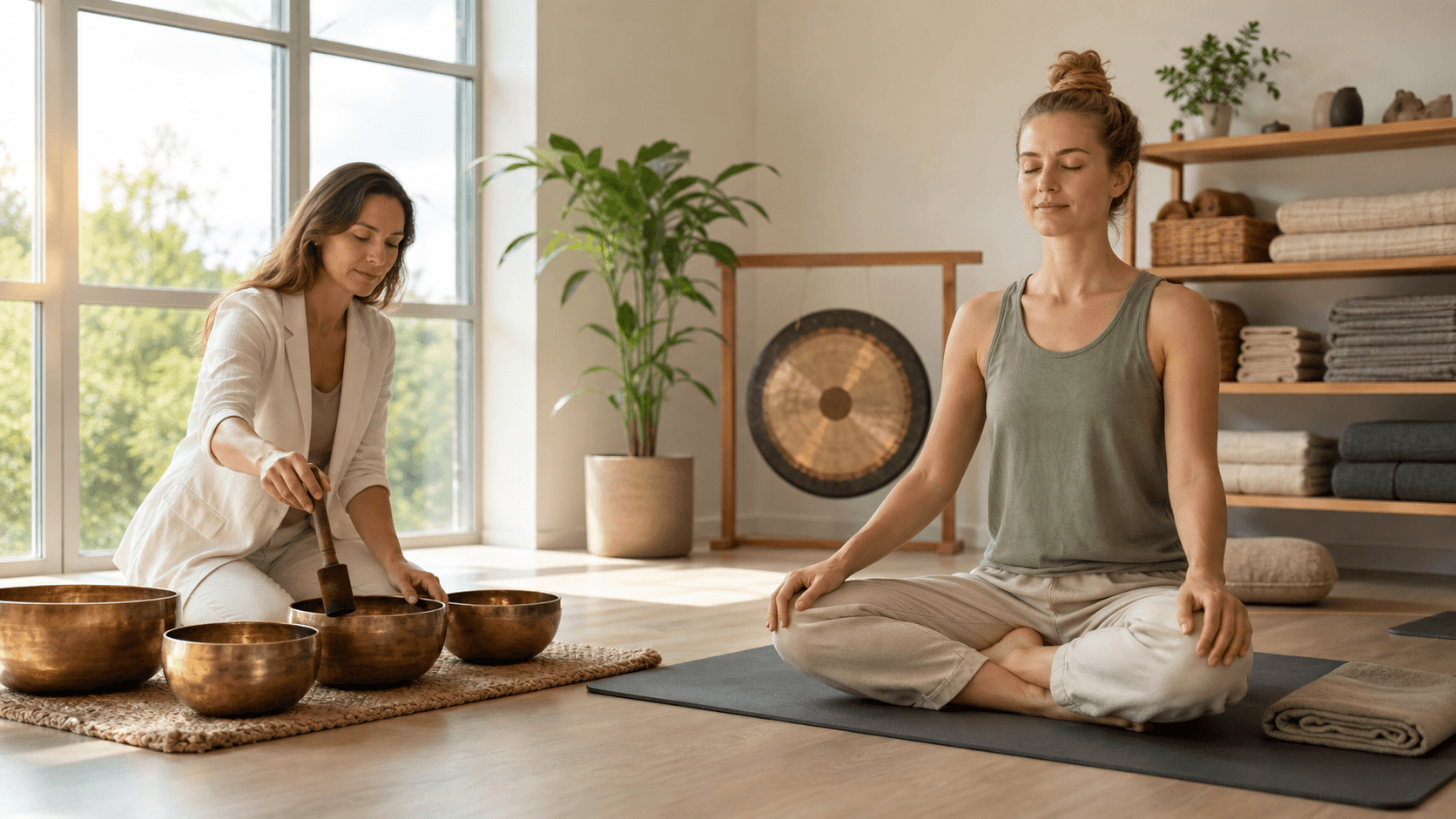
Adding sound can make a big difference. Instead of trying to force stillness, soft tones create a gentle doorway into it. When we hear steady, calming sounds like those from Himalayan singing bowls, our bodies tend to soften naturally.
Sound affects more than just our ears. It is felt as much as it is heard. The vibrations can:
- Help slow down breathing
- Relax tight muscles
- Quiet repetitive or anxious thoughts
This is not about concentrating hard. Sound gives the mind something simple to follow, which can take away the tension that often comes with trying to meditate the "right" way. When the nervous system feels safe, the mind and body both respond with less resistance.
What to Expect During a Meditation Sound Bath
Some people feel nervous before their first sound bath. That is normal. But there is nothing you need to know or prepare. You do not have to sit perfectly or know any techniques. You just come as you are.
A typical session feels calm and simple. Here is what the experience usually includes:
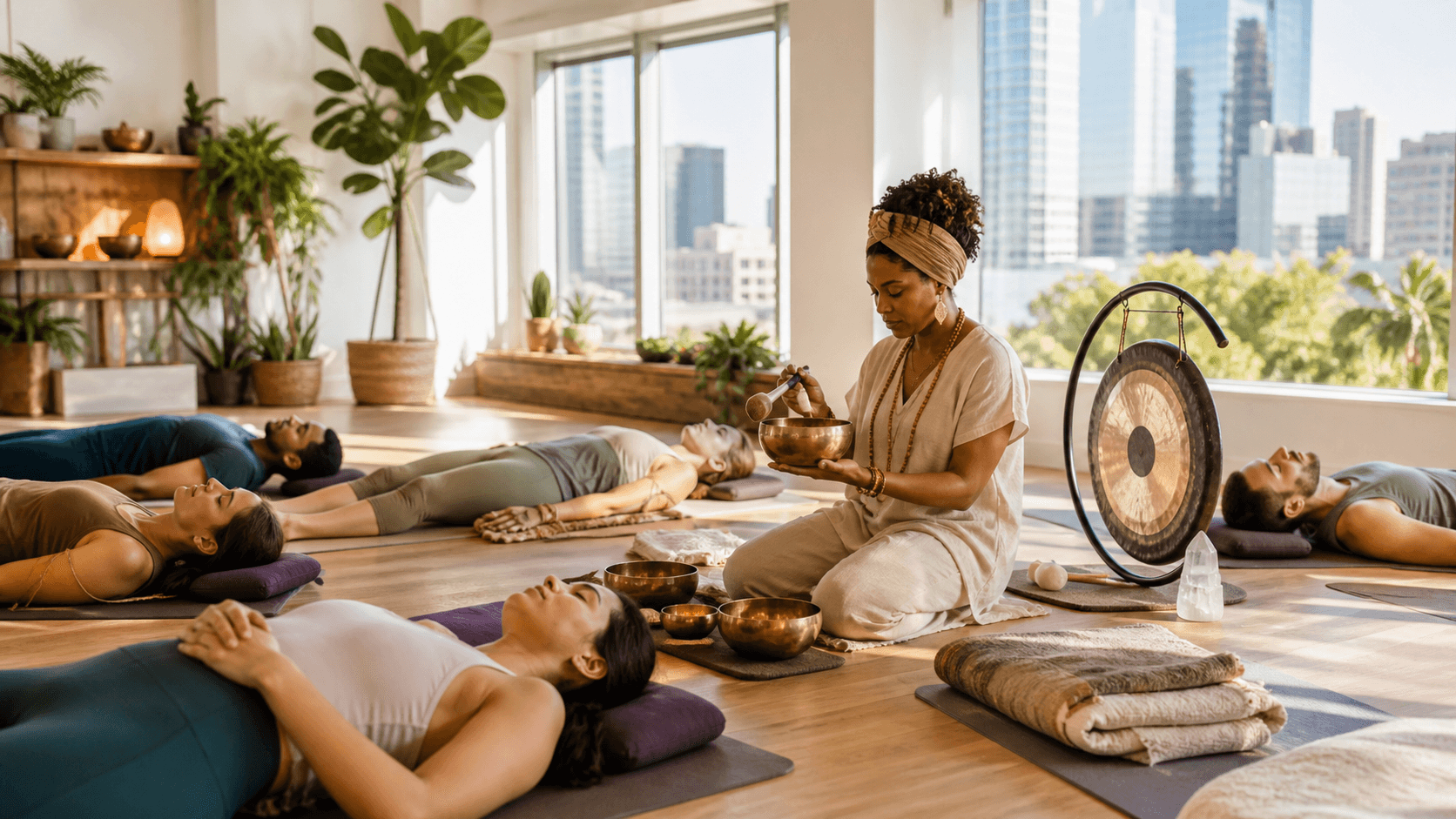
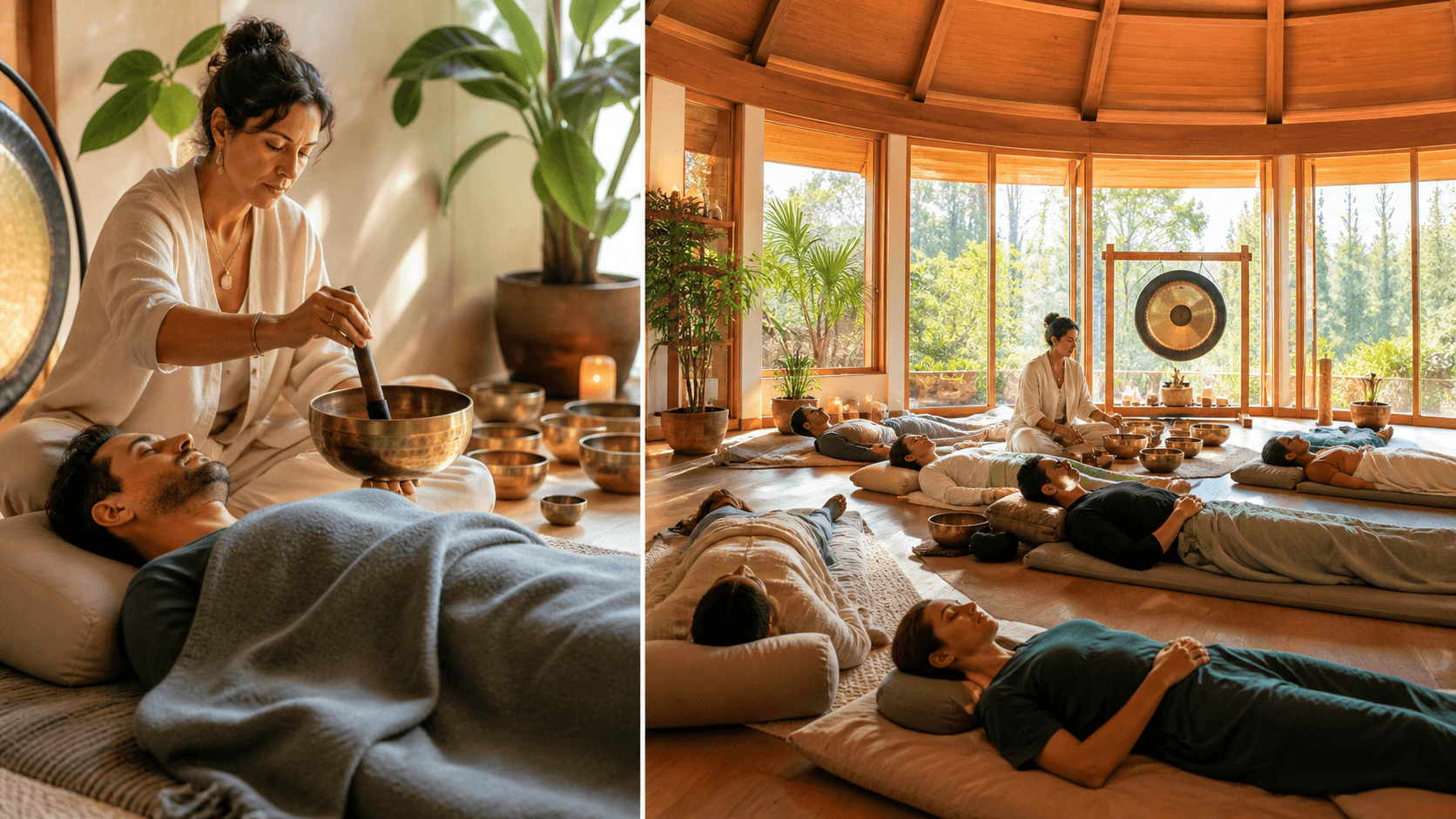
- A dim room with mats or cushions where you lie down and get comfortable
- Soft blankets, eye covers, or gentle props to support rest
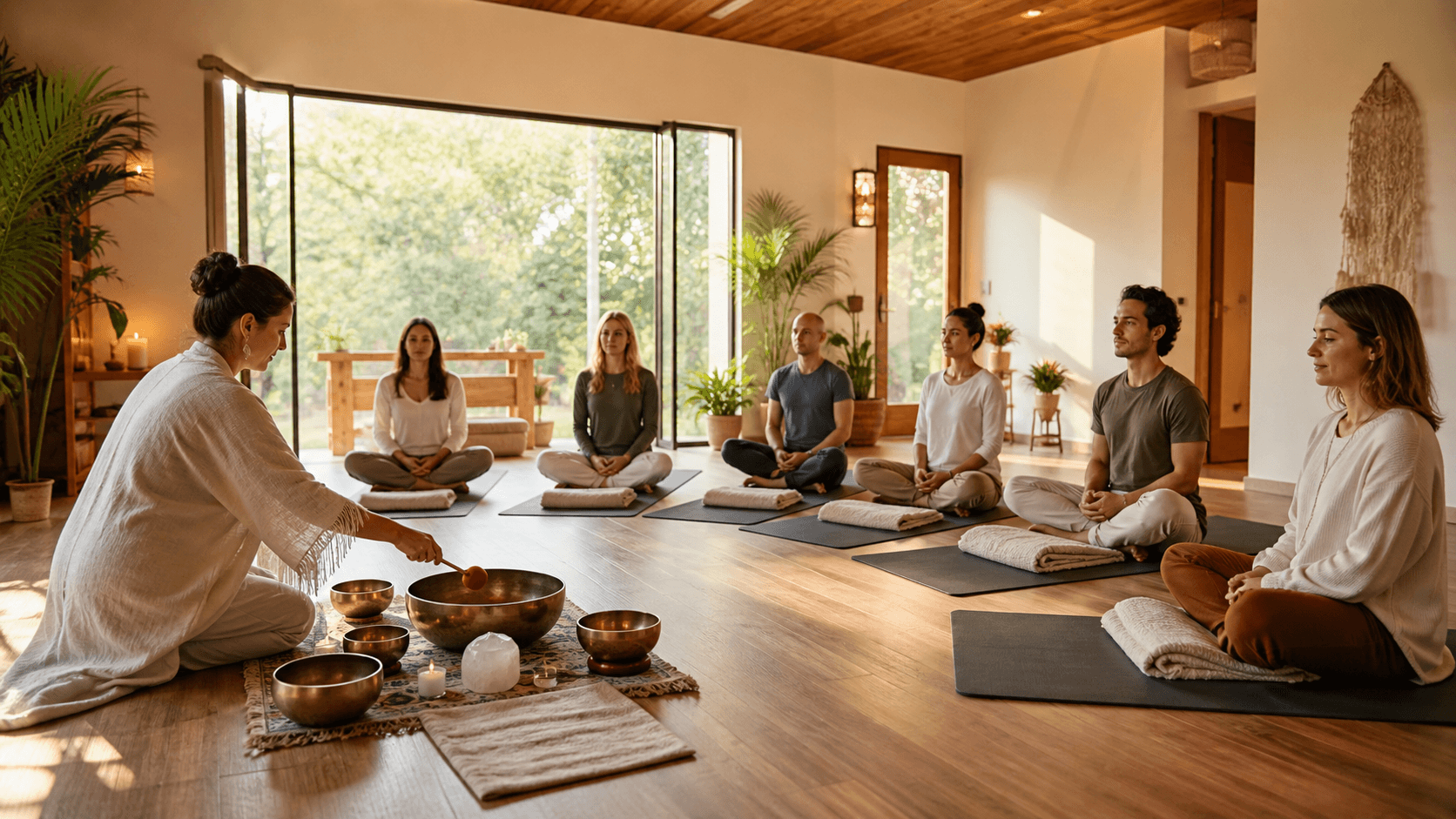
- The sounds of singing bowls or other instruments played in a slow, steady rhythm
The idea is not to "do" anything. You just let the body and mind respond naturally. Some people drift into a sleep-like state. Others stay awake and aware, just resting. The experience is different each time, and that is okay. There is no wrong way to receive sound.
Using Sound to Support an Ongoing Meditation Practice
Sound healing can be helpful whether someone is brand new to meditation or has been practicing for years. If sitting in silence has felt intimidating, sound brings a kind of invitation. The quiet is not quite so empty anymore, which can make it easier to return to.
For experienced meditators, sound can work like a reset. It reaches parts of the body and mind that might not respond to silence alone. Subtle tension, emotional build-up, or stray thoughts can shift more easily when there is a soft auditory anchor.
Here are a few ways people use sound in their routines:
- New meditators might use weekly sound baths to build trust with stillness
- Long-time practitioners may add sound occasionally to deepen their awareness
- Monthly sessions offer a chance to check in when life gets busy
A summer sound bath might feel especially helpful when routines change, travel picks up, or work gets more demanding. It can be a way to stay connected to calm without pressure.
The Power of Blending Stillness and Sound
When stillness is hard to reach, sound offers a bridge. Even just a few minutes of structured sound can lead to deeper rest than many expect. That combination often softens the nervous system, builds body awareness, and gives the mind a place to settle without pushing for stillness.
Sound does not try to replace meditation. It meets it, softens its edges, and lets us move into quiet in a way that feels more kind than effortful.
More than just a pause from the rush of daily life, sound invites us to open up to our inner space. Many people find that joining these sessions provides fresh perspective after long, tiring days. The steady vibrations create an environment where stress naturally eases away, allowing our inner calm to emerge. This gentle blend of sound and stillness nurtures our ability to relax and remain mindful even during hectic moments. When the soothing sounds fill the space, they gently carry us from tension into a state of quiet renewal.
The Power of Blending Stillness and Sound
When stillness is hard to reach, sound offers a bridge. Even just a few minutes of structured sound can lead to deeper rest than many expect. That combination often softens the nervous system, builds body awareness, and gives the mind a place to settle without pushing for stillness.
Sound does not try to replace meditation. It meets it, softens its edges, and lets us move into quiet in a way that feels more kind than effortful.
Experience how sound and stillness support one another by joining a meditation sound bath in Jersey City that requires no special training, only a willingness to rest and listen. At TSM Healing Center, we provide a gentle, supportive environment for every stage of your wellness journey, so whether summer feels hectic or you are simply seeking a steady rhythm for quiet moments, sound can help you reconnect with calm. To learn more or schedule a session, contact us.